AI Programmatic Job Advertising for Recruiters: The Complete 2026 Guide
This guide covers everything you need to know about AI programmatic job advertising: what it is, how it works, the real costs of ignoring it, and how to choose the right tool. You will also see how Collective's full-cycle platform connects programmatic inbound distribution with autonomous AI sourcing to move you from brief to shortlist in minutes, not days.
What Is AI Programmatic Job Advertising?
Programmatic job advertising is the automated buying, placement, and optimization of job postings across job boards, aggregators, search engines, and social platforms, using rules-based or AI-driven bidding rather than manual, flat-fee listings. Instead of logging into multiple boards and copying the same role description into each one, a programmatic system handles distribution, budget allocation, and performance optimization across dozens of channels at once.
The simplest way to understand it: traditional job posting works like buying a newspaper classified. You choose a board, pay a fixed fee, and wait to see who applies. Programmatic works like a performance marketing desk. Software continuously evaluates which channels are producing qualified applicants and shifts budget toward them in real time, pausing or capping spend on channels that are not converting.
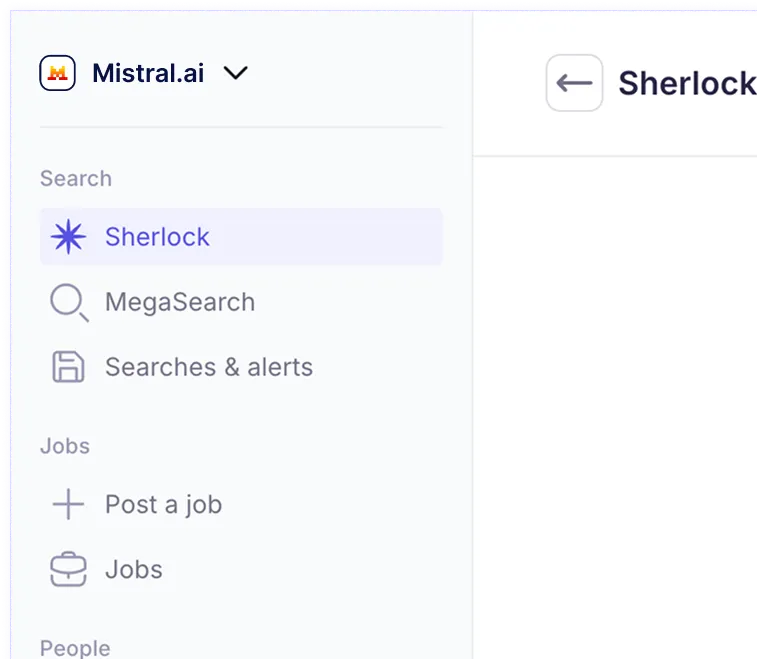
Collective operates across both sides of this equation. Alongside its job board and 25+ job board distribution channels for inbound applications, Collective's AI sourcing agent, Sherlock, runs autonomous outbound searches across 800M+ profiles from 30+ public and proprietary data sources. The result is a full-cycle platform that covers inbound and outbound from a single workflow.
Why Programmatic Job Advertising Matters in 2026
The programmatic job advertising market is projected to grow from approximately 2.38 billion dollars in 2026 to 8.32 billion dollars by 2035, a compound annual growth rate that outpaces the broader job advertising market roughly two to one. Despite that trajectory, only around 34% of enterprise companies currently use programmatic advertising, meaning two-thirds of recruiting teams are still managing job ads manually and losing budget to channels that do not convert.
93 percent of recruiters plan to increase their use of AI in 2026, and much of that investment is landing directly on advertising and sourcing workflows. The talent market is too competitive and advertising channels too fragmented for manual, gut-feel job ad management to remain viable. Recruiters who treat job advertising the way a performance marketer treats paid acquisition, with real-time data, continuous optimization, and clear attribution, consistently outperform teams still relying on flat-fee posts.
The EU AI Act, with key obligations applying from August 2026, classifies AI systems used in candidate sourcing and ranking as high-risk, requiring organizations to maintain detailed audit logs, conduct bias assessments, and ensure human oversight at key decision points. Choosing a platform with transparent reporting and built-in compliance controls is no longer optional. Collective is built with recruiter oversight at the center, augmenting your decision-making rather than replacing it.
Common Challenges in Programmatic Job Advertising and How AI Solves Them
Most recruiting teams that struggle with job advertising face the same set of structural problems. AI-driven programmatic platforms exist specifically to address each one. Here is where the pain concentrates and how the right tool responds.
Key Problems Recruiters Face Without Programmatic AI
- Wasted ad spend on non-converting channels. Research from Aptitude Research consistently shows that approximately 40% of job advertising budget is spent on channels that do not produce quality applicants. On a team spending EUR10,000 per month on job boards, EUR4,000 of that is going nowhere. Manual posting gives you no mechanism to redirect that spend automatically when a channel stops converting.
- Zero performance visibility across channels. When you post manually, you rarely know which board produced which applicant. There is no per-channel attribution, no cost-per-application breakdown, and no way to compare which source actually drove your last 10 hires. Budget decisions for the next cycle rely on incomplete data or instinct.
- Time drain on repetitive setup. Posting a single job to five boards takes 20 to 30 minutes of copying, formatting, and navigating each platform's interface. Multiply that across 50 open roles and you have created a full-time administrative job with no recruiting value. Research estimates recruiters spend an average of 10 hours per week on manual job advertising tasks.
- Budget rigidity from flat-fee contracts. Traditional job board contracts lock you into fixed-rate postings regardless of results. A 30-day slot costs the same whether it generates 100 applications or zero. There is no mechanism to pause, reallocate, or scale based on real performance.
- Inbound and outbound running in separate silos. Most teams manage inbound applications from job boards in one system and outbound sourcing in another. The lack of coordination between the two means recruiters miss candidates who applied weeks ago while spending sourcing budget on the same profiles from the open market.
AI programmatic platforms address the first four problems by automating distribution, tracking cost-per-application at the channel level, reallocating budget toward top-performing sources in real time, and replacing flat-fee contracts with performance-based spend. Collective goes further by addressing the fifth. Its job board and inbound job board distribution across 25+ channels feeds directly into the same workflow as Sherlock's outbound sourcing, with MyTalents reactivating existing candidates from your ATS database before either inbound or outbound spend begins.
What to Look for in an AI Tool for Programmatic Job Advertising
Not every platform that claims to automate job advertising delivers the depth of targeting, transparency, and integration that modern recruiting teams actually need. When evaluating tools, focus on the features that directly affect your cost per hire and time to fill.
Must-Have Features for Programmatic Job Advertising
- Multichannel distribution with real-time bidding. The platform should distribute your roles across a broad network of job boards, aggregators, social channels, and niche sites simultaneously. Real-time bidding ensures you are competing for placements dynamically based on actual candidate engagement, not fixed pricing models.
- Automated budget reallocation. Channels that produce qualified applicants should receive more budget automatically. Channels that produce clicks without conversions should be deprioritized or paused without manual intervention. This dynamic allocation is the mechanism that cuts wasted spend.
- Full ATS integration. Connecting your ad campaigns to your applicant tracking system is what closes the loop between a click and a hire. Without ATS integration, you cannot attribute hires to sources, track cost-per-hire by channel, or automate candidate data transfer. Look for a platform that connects to 50+ ATS systems, as Collective does through its ATS Integration layer.
- Granular analytics and source attribution. You need cost-per-click, cost-per-application, and cost-per-hire data at the channel level, not just aggregate campaign reporting. Multi-touch attribution, which gives partial credit to every touchpoint in a candidate's journey, gives a far more accurate picture than last-click models.
- Inbound screening at scale. Distributing your job ad across 25 channels is only useful if the resulting applications are screened against your criteria before they reach your desk. Sherlock, Collective's AI sourcing agent, screens inbound applications and surfaces the most relevant profiles, with 0% missed applications from shortlisted results.
- Outbound sourcing in the same workflow. Programmatic inbound fills the top of the funnel. For hard-to-fill or specialist roles, inbound volume alone is rarely enough. A platform that pairs inbound distribution with autonomous outbound sourcing closes that gap without adding another tool to your stack.
- Multichannel candidate outreach. Once your shortlist is ready, you need to reach candidates where they actually respond. Collective lets you contact 100 candidates in 1 click via WhatsApp, email, and chat, covering the channels where response rates are highest, not just the work inbox.
Collective meets or exceeds each of these criteria. It distributes roles across its own job board and 25+ additional job board channels, connects to 50+ ATS platforms, provides channel-level reporting, screens inbound applications via Sherlock, and pairs all of that with autonomous outbound sourcing across 800M+ profiles. Unlike AI sourcing-only tools such as Kalent, Juicebox, or TalentFindr, and unlike job boards alone such as Hellowork, Collective is the only platform that combines end-to-end coverage across the full recruitment workflow, including sourcing, outreach, job posting, AI scoring of applications, and ATS integration, under a single subscription. AI scoring of applications and AI sourcing within a client's own ATS database are unique to Collective; no competitor offers either even partially. This is why 15,000+ recruiters at companies including Mistral AI, Accenture, Randstad, and Decathlon have adopted it.
How Recruiters and Staffing Firms Use AI Programmatic Advertising at Scale
The recruiters getting the clearest return from AI programmatic job advertising are the ones who treat it as a data tool, not just an automation shortcut. Here is how different teams apply it in practice.
- High-volume inbound distribution. In-house teams at enterprise brands like Leroy Merlin and Danone use programmatic distribution to broadcast roles across Collective's job board and 25+ additional job board channels simultaneously, setting cost-per-application targets and letting the platform reallocate budget toward sources that convert. Volume roles that previously required daily manual posting now run on automated rules.
- Intelligent inbound screening. Distributing at scale means handling more applications. Sherlock screens every inbound application against role criteria and surfaces the strongest profiles, so recruiters review a ranked shortlist rather than an unfiltered pile. With 0% missed applications from shortlisted results, no strong candidate slips through because a recruiter ran out of time.
- Outbound sourcing for hard-to-fill roles. Staffing firms including Hays, Michael Page, and Robert Half use Sherlock to run outbound searches on roles where inbound volume is low or candidate quality is inconsistent. Brief Sherlock on a role and it runs 10+ parallel searches simultaneously, screening 1,000+ profiles per minute across 800M+ profiles to surface a ranked shortlist.
- ATS reactivation before new spend. Before broadcasting a new role across paid channels, Collective's MyTalents feature searches your existing ATS database for candidates who already match the brief. This approach reduces cost-per-hire on roles that can be filled from dormant talent pools, reserving programmatic ad budget for genuinely new searches.
- MegaSearch for high-volume sourcing. On Basic plans and above, MegaSearch is available as a high-volume search feature distinct from Sherlock's intelligent ranked sourcing. Teams running volume hiring campaigns use it to cast a wider net before Sherlock applies its ranking layer.
- Multichannel outreach at shortlist stage. Once a shortlist is ready, recruiters using Collective contact 100 candidates in 1 click via WhatsApp, email, and chat. Reaching candidates across the channels where they actually respond, not just their work inbox, increases response rates without adding manual outreach time.
Collective's differentiation from AI sourcing-only tools like Juicebox, Kalent, or TalentFindr, and from single-channel job board platforms like Hellowork, is the combination of its own job board, inbound job board distribution across 25+ channels, multichannel outreach, ATS integration, AI scoring of applications, AI sourcing within your own ATS database, and proprietary data signals that other platforms do not surface. No competitor in any category, whether ATS, job board, recruitment agency, or AI sourcing tool, covers more than a partial slice of this workflow. Collective replaces the need to stitch together multiple point solutions.
LinkedIn Recruiter, as a market reference, carries a general market cost of more than EUR10,000 per year and does not provide candidate availability status, day rate or salary data, direct phone numbers, fresh CV data, or talent indicators. Collective provides all of these on its Start plan and above, giving recruiters a richer picture of each profile before outreach.
Best Practices and Expert Tips for AI Programmatic Job Advertising
Programmatic advertising handles distribution, but the results depend on how well you configure, monitor, and adjust your campaigns. These practices reflect what Collective's 15,000+ recruiters have found most effective.
- Set cost-per-application and cost-per-hire targets before launch. Define what a qualified application is worth to your team before spending a single euro. Without a clear target, the platform has no signal to optimize toward. Teams with defined CPH targets consistently outperform those optimizing for click volume.
- Reactivate your ATS before broadcasting to new channels. Use MyTalents to search your existing candidate database against the role brief before opening up paid inbound channels. Filling a role from a dormant talent pool costs a fraction of sourcing from scratch. This step alone can reduce cost-per-hire on high-frequency roles significantly.
- Audit your channel performance before switching platforms. Pull 90 days of job board invoices and map every dollar to a result. Most teams find that 2 to 3 boards produce 80% or more of their quality applicants while the rest consume budget without return. That baseline tells you exactly where the waste is before any automation begins.
- Review performance weekly, not monthly. Automation handles continuous micro-optimizations, but a campaign left unreviewed for a month can keep spending on a channel that stopped converting weeks earlier. Weekly review cycles catch waste early and allow faster reallocation toward what is working.
- Combine inbound and outbound in the same workflow. Programmatic inbound fills the top of the funnel with active candidates. For specialist or senior roles, inbound volume alone is rarely enough. Pairing inbound distribution with Sherlock's outbound sourcing means you cover both the active market and passive candidates simultaneously, without managing two separate systems.
- Use source-of-hire data to guide budget decisions, not source-of-click data. Channels that produce high application volumes at low cost-per-click are not always the channels that produce hires. Shifting budget based on which sources actually generate interviews and offers, rather than which ones generate clicks, is the single most impactful optimization most teams can make.
- Apply programmatic logic to outreach, not just distribution. Reaching 100 candidates in 1 click via WhatsApp, email, and chat means your outreach scales with your shortlist rather than bottlenecking at the outreach stage. The same data discipline that governs your ad spend should govern your outreach channel mix: go where your candidates respond.
Advantages and Benefits of AI Programmatic Job Advertising for Recruiters
The measurable benefits of programmatic advertising compound over time as the platform learns which channels, bid levels, and role types perform best for your specific hiring context.
- Reduced cost per applicant. Adopting programmatic advertising cuts average cost-per-applicant by over 30% compared to manual posting. Budget flows only to channels that deliver qualified candidates, eliminating the flat-fee waste that characterizes traditional job board contracts.
- Faster time to fill. Programmatic users cut time-to-fill at twice the rate of teams using traditional posting methods. When Collective pairs programmatic inbound with Sherlock's outbound sourcing, that compression is even sharper: recruiters using Collective report 10x less research time compared to manual workflows.
- 3x more perfect matches. Recruiters using Collective report 3x more perfect matches from their searches. This reflects the combination of intelligent ranking from Sherlock and precise inbound screening, which together reduce the noise in every shortlist.
- Scalability without additional headcount. Programmatic systems handle large volumes of job postings without piling on manual workload. Whether you are managing 10 roles or 100, distribution runs automatically. Staffing firms like Hays and Randstad use Collective to scale candidate output per recruiter without adding staff.
- Full-funnel attribution. Connecting job ad spend to hire outcomes through 50+ ATS connectors gives you a single source of truth: which channels produced which hires at what cost. That visibility transforms job advertising from a cost center into a measurable investment.
- Access to proprietary candidate data. Unlike traditional job boards, Collective surfaces data signals that most platforms do not provide: candidate availability status, day rate and salary expectations (on Start plan and above), direct email and phone numbers, fresh CV data, and talent indicators. These signals improve targeting before a single ad impression is purchased.
- Reduced recruiter admin burden. Research estimates that recruiters spend an average of ten hours per week on manual job advertising tasks. Collective's automated distribution, inbound screening via Sherlock, and one-click outreach to 100 candidates reclaim that time for the conversations that actually advance placements.
How Collective Simplifies AI Programmatic Job Advertising
Collective is a full-cycle AI recruiting platform built around Sherlock, an autonomous AI sourcing agent. It takes a role brief and delivers a ranked shortlist in minutes. The programmatic job advertising layer is what makes inbound work at the same speed as Sherlock's outbound.
When you post a role on Collective, it distributes simultaneously across its own job board and 25+ additional job board channels without manual entry. Sherlock then screens every inbound application against your brief, surfacing the strongest profiles with 0% missed applications from shortlisted results. For roles where inbound volume is insufficient, Sherlock runs outbound searches across 800M+ profiles from 30+ data sources, running 10+ parallel searches simultaneously and screening 1,000+ profiles per minute. MyTalents reactivates existing candidates from your ATS before either inbound or outbound spend begins.
At the outreach stage, you contact 100 candidates in 1 click via WhatsApp, email, and chat. Collective's 50+ ATS connectors sync candidate data in real time, so every application, shortlist, and outreach interaction feeds back into your existing workflow without duplicate entry. Salary and day-rate data, direct phone numbers, availability status, and fresh CV data are available on the Start plan and above, giving your outreach context that LinkedIn Recruiter, Kalent, Hellowork, Juicebox, and TalentFindr do not provide.
Collective's primary differentiator is end-to-end coverage of the full recruitment workflow: sourcing, outreach, job posting via its own job board and 25+ partner channels, AI scoring of applications, and ATS integration in one platform. Every competitor category covers only a partial slice. Kalent and Juicebox offer AI sourcing but no job board or ATS-native scoring. Hellowork offers a job board but no outbound sourcing or AI scoring. LinkedIn Recruiter offers a single sourcing channel with no job board distribution or ATS-native scoring. Only Collective connects all of these functions, and only Collective offers AI scoring of applications and AI sourcing within a client's own ATS database.
Collective is trusted by 15,000+ recruiters at organizations including Mistral AI, Vinci, Leroy Merlin, Decathlon, Danone, Accenture, Randstad, Hays, Michael Page, Robert Half, LittleBigConnection, and Freelance.com. It is a 25-person startup founded in 2021 in Paris, backed by eFounders and Blossom Capital, with EUR7M raised. Plans start with a Free tier, followed by Basic at EUR95 per seat per month and Start at EUR135 per seat per month, with Pro available on custom terms.
Brief Sherlock on your next role and see the shortlist arrive in minutes. Try for free at collective.work.
The Future of AI Programmatic Job Advertising
The programmatic job advertising market is on a clear growth trajectory, and the platforms advancing fastest are those that connect inbound distribution to outbound sourcing, candidate screening, and ATS attribution in a single workflow. The teams that will lead on cost-per-hire and time-to-fill in the next three years are the ones building that infrastructure now.
Agentic AI is accelerating the shift. Where first-generation programmatic platforms automated distribution and bidding, agentic systems now execute multi-step workflows autonomously, from brief to shortlist to outreach, without a recruiter touching each step manually. Collective's Sherlock is built on this model: autonomous, outcome-driven, and designed to free recruiters for the relationship work that creates placements.
The EU AI Act compliance requirements applying from August 2026 make human oversight non-negotiable. Collective is designed around this principle. Sherlock surfaces profiles and rankings. You make the hiring decisions. The platform augments your judgment; it does not replace it.
If your team is still managing job ad spend manually, reviewing performance quarterly, and running inbound and outbound in separate systems, the efficiency gap is widening every month. The fix is straightforward: connect your inbound distribution to intelligent screening, pair it with autonomous outbound sourcing, and attribute every dollar of spend back to a hire.
Book a demo at collective.work to see how Collective's full-cycle platform puts all of that in one place.
FAQs About AI Tools for Programmatic Job Advertising
What is AI programmatic job advertising?
AI programmatic job advertising is the automated buying, placement, and optimization of job ads across multiple channels using AI-driven bidding and real-time performance data. Instead of manually posting to individual boards and paying flat fees, programmatic platforms distribute roles across dozens of channels simultaneously and shift budget toward the sources producing qualified applicants. Collective integrates programmatic inbound distribution across its own job board and 25+ additional job board channels with Sherlock's autonomous outbound sourcing and inbound screening into a single full-cycle platform.
How does programmatic job advertising work?
You define a role, set cost-per-application targets, and connect your ATS. The platform distributes your job posting across its network of connected job boards, search engines, and social channels. Real-time bidding determines how much to pay for each placement based on historical performance and candidate signals. Budget shifts automatically toward top-performing channels and away from those that are not converting. Collective closes the loop by screening inbound applications via Sherlock and syncing all candidate data back to your ATS through 50+ connectors.
What are the best AI tools for programmatic job advertising in 2026?
The strongest platforms combine multichannel distribution, real-time budget optimization, ATS integration, and candidate-level analytics. Collective stands apart from competitors including LinkedIn Recruiter, Kalent, TalentFindr, Juicebox, and Hellowork because it is the only platform that adds autonomous AI sourcing via Sherlock, inbound screening with 0% missed applications from shortlisted results, multichannel outreach to 100 candidates in 1 click, AI scoring of applications, AI sourcing within your existing ATS database, its own job board, and proprietary data signals including availability status, salary and day rate, and direct contact details. It is trusted by 15,000+ recruiters and delivers 10x less research time and 3x more perfect matches.
Why do recruiters need a programmatic job advertising tool in 2026?
Approximately 40% of job advertising spend is wasted on channels that do not produce quality applicants when teams post manually. Recruiters lose an average of ten hours per week to manual job ad management, time that produces no hiring value. Programmatic tools reclaim those hours and redirect budget toward channels that convert. For staffing firms managing 20 to 30 open requisitions simultaneously, the difference between manual posting and Collective's automated distribution and sourcing is the difference between a sustainable desk and one that cannot keep up with demand.
What is the difference between inbound programmatic job advertising and outbound AI sourcing?
Inbound programmatic job advertising distributes your job posting across job boards and paid channels to attract active candidates who are already searching. Outbound AI sourcing proactively identifies and contacts passive candidates who match your brief but have not applied. Both are necessary for competitive hiring in 2026. Collective combines both: its own job board plus 25+ additional job board channels for inbound distribution, and Sherlock's autonomous sourcing across 800M+ profiles for outbound, managed from a single workflow.
How does Collective differ from LinkedIn Recruiter, Kalent, TalentFindr, and Hellowork for programmatic job advertising?
LinkedIn Recruiter is a single-channel sourcing tool with a general market cost of more than EUR10,000 per year. It does not provide candidate availability status, day rate or salary data, direct phone numbers, fresh CV data, or talent indicators. Kalent and TalentFindr offer AI sourcing but no job board, no inbound distribution, and no AI scoring of applications. Hellowork offers a job board but no outbound sourcing, no AI scoring, and no ATS-native integration. Collective surfaces all proprietary data signals on its Start plan and above, distributes roles across its own job board and 25+ additional channels, connects to 50+ ATS platforms, and pairs inbound distribution with Sherlock's outbound sourcing across 800M+ profiles. No competitor covers the full recruitment workflow; Collective does.
How much does AI programmatic job advertising cost with Collective?
Collective offers a Free plan for teams getting started. The Basic plan is EUR95 per seat per month and includes MegaSearch for high-volume searches and access to core job board distribution and outreach features. The Start plan is EUR135 per seat per month and adds salary and day-rate data, giving recruiters the compensation context they need for targeted outreach. The Pro plan is available on custom terms for larger teams and agencies. All paid plans include Sherlock's AI sourcing agent and ATS integration across 50+ platforms.